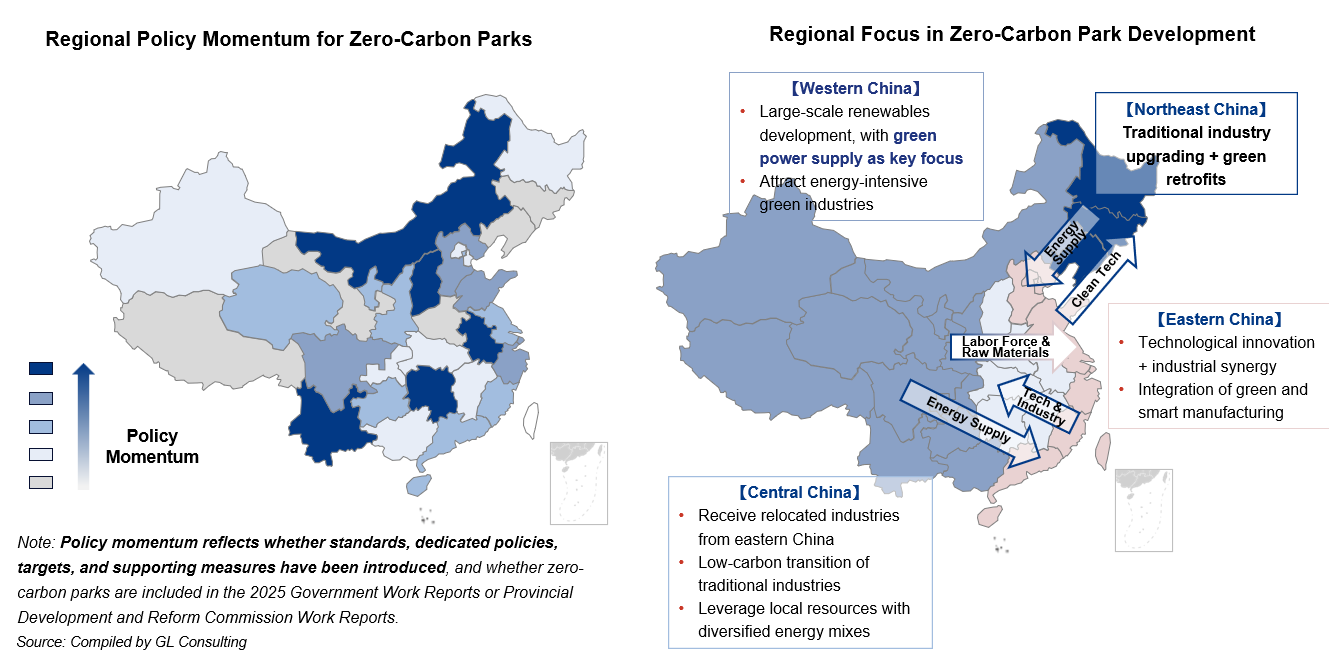
China's push for zero-carbon industrial parks is accelerating in 2025. More than 80% of provinces have prioritized park development through dedicated policies or pilot programs. Eastern provinces boast the most mature frameworks, while Inner Mongolia, Yunnan, Anhui, Hunan, and Shanxi stand out in central and western regions. The Northeast is largely lagging.
- Fiscal incentives drive action: Local subsidies reach up to 5 million yuan, with some regions offering corporate income tax breaks for park entrants. Special funds, government procurement, and interest-subsidized loans target green technological R&D and infrastructure.
- Streamlined approvals: Zero-carbon parks can be exempt from energy-efficiency and carbon emission assessments, reducing reporting and administrative costs. Steel, refining and petrochemicals, and data center projects use this to mitigate policy risks and secure first-mover advantages.
- Carbon-compliant products gain edge: Expansion of zero-carbon parks boosts supply of zero- and low-carbon products. With renewable electricity tracing and carbon footprint certification, exports can avoid carbon tariffs.
- National standards: Parks can qualify with 90% carbon reduction. Only provincial-level or above zones can apply, with 3–5 years construction and clear technical and business plans required for "national-level" designation.

The full report dives deeper into:
- National policy highlights and pilot schedules
- Local implementation progress
- Petrochemical sector impacts and opportunities
- Policy evolution and trends
The above content is the major conclusions and highlights extracted from China (Energy Transition) Policy Perspective. To get detailed full text, send an email to glconsulting@mysteel.com.
