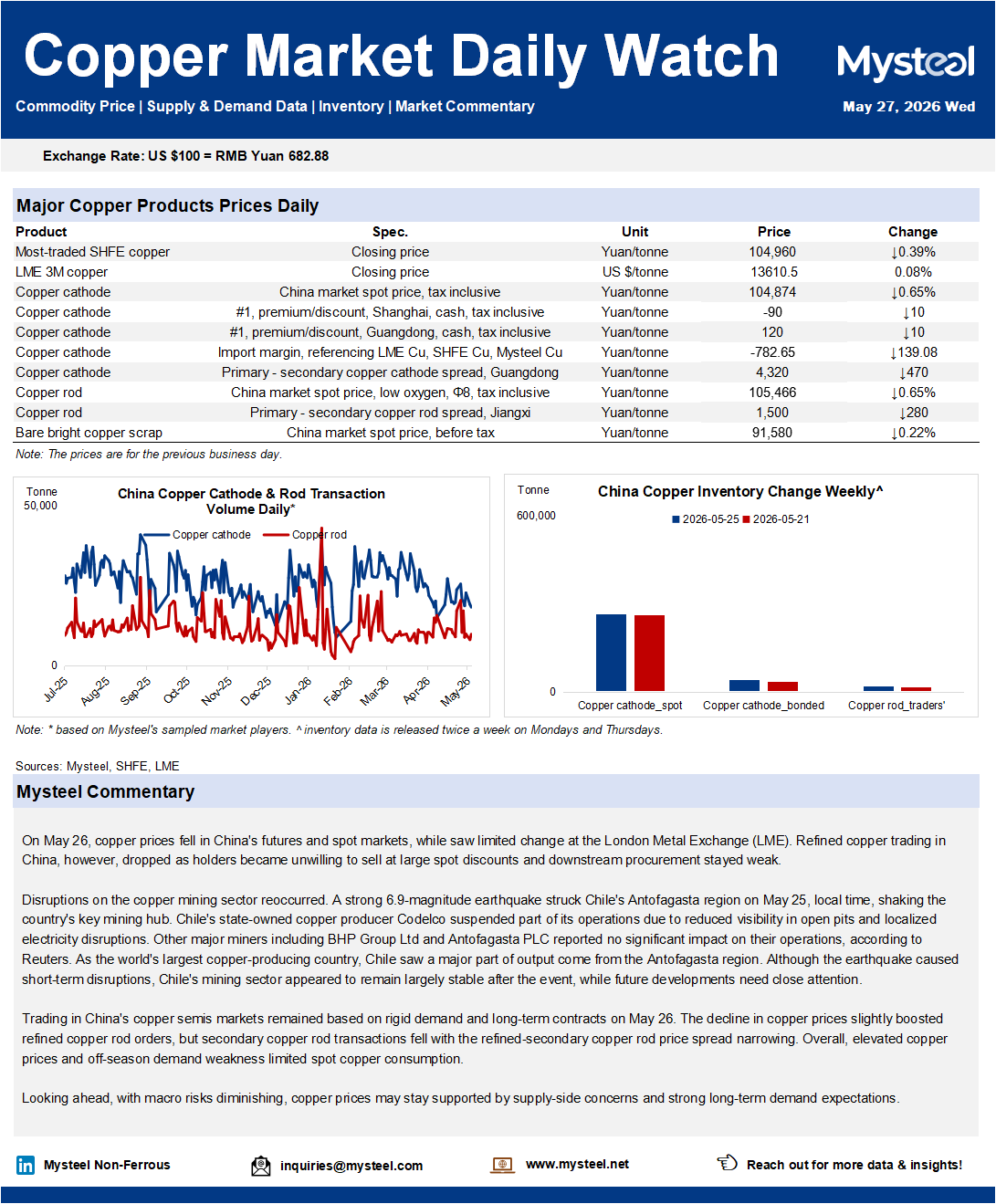
On May 26, copper prices fell in China's futures and spot markets, while saw limited change at the London Metal Exchange (LME). Refined copper trading in China, however, dropped as holders became unwilling to sell at large spot discounts and downstream procurement stayed weak.
Disruptions on the copper mining sector reoccurred. A strong 6.9-magnitude earthquake struck Chile's Antofagasta region on May 25, local time, shaking the country's key mining hub. Chile's state-owned copper producer Codelco suspended part of its operations due to reduced visibility in open pits and localized electricity disruptions. Other major miners including BHP Group Ltd and Antofagasta PLC reported no significant impact on their operations, according to Reuters. As the world's largest copper-producing country, Chile saw a major part of output come from the Antofagasta region. Although the earthquake caused short-term disruptions, Chile's mining sector appeared to remain largely stable after the event, while future developments need close attention.
Trading in China's copper semis markets remained based on rigid demand and long-term contracts on May 26. The decline in copper prices slightly boosted refined copper rod orders, but secondary copper rod transactions fell with the refined-secondary copper rod price spread narrowing. Overall, elevated copper prices and off-season demand weakness limited spot copper consumption.
Looking ahead, with macro risks diminishing, copper prices may stay supported by supply-side concerns and strong long-term demand expectations.