Copper prices recorded strong growth from late July to early August 2026, aligning with the firm fundamentals and indicating that recent macro influences have shifted to price supporting. Compared with previous years, geopolitical risks, Federal Reserve policy shifts and U.S. trade measures as major macro factors have influenced copper prices through different channels and with varied directions in 2026, adding complexity and uncertainty to price trends.
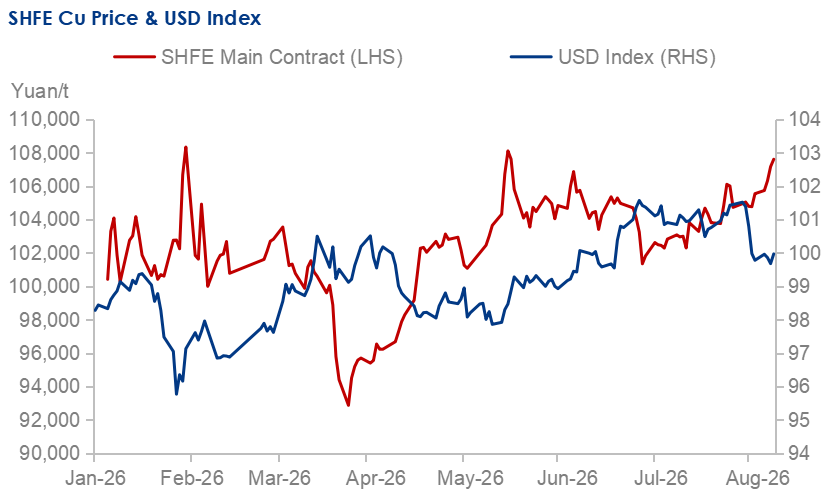
The U.S. dollar index experienced a sharp decline recently, pressured by weaker-than-expected U.S. economic data and easing inflation. The U.S. second-quarter GDP growth fell short of market expectations, consumer spending decelerated, and underlying economic momentum weakened. Meanwhile, the year-on-year increase in the U.S. PCE price index moderated, indicating easing inflationary pressure. Consequently, the Federal Reserve kept interest rates unchanged at its July meeting, putting further pressure on the dollar and pushing the USD index below 100 for the first time since mid-June.
Data source: SHFE, Fed, Mysteel
A weaker U.S. dollar provided direct support for dollar-denominated commodities, while expectations of additional U.S. tariffs on refined copper fueled concerns over supply availability in non-U.S. markets. At the same time, tightening raw-material supply continued to strengthen price support. Together, these forces drove the most-active SHFE copper contract sharply higher, reaching an intraday peak of Yuan 108,470/tonne as of August 7, compared with Yuan 104,200/tonnes on July 20.
The recent rally once again demonstrated copper's strong sensitivity to dollar liquidity and macro expectations. Looking back at the first half of 2026, macro influences on copper prices showed both greater intensity and different directions compared with the second half of 2025. The greater depth stemmed from geopolitics and U.S. tariff policy, while the shift in direction was more evident in Federal Reserve rate policy.
Geopolitical risks shift from supply disruptions to broader inflationary pressure
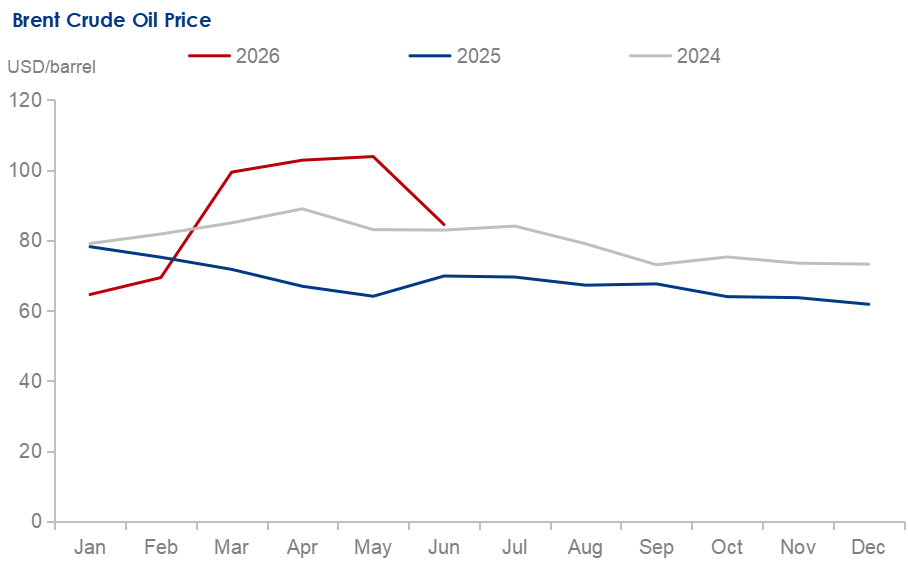
In the first half of 2026, global geopolitical tensions intensified compared with 2025. With the Russia-Ukraine conflict showing limited signs of resolution and Red Sea shipping security remaining under threat, renewed volatility in the Middle East further drove up global energy prices and logistics costs. Although the Middle East conflict did not directly affect major copper-producing regions, its impact on copper was transmitted through multiple channels.
On the supply side, the Middle East conflict hit the SX-EW copper supply chain. Market instability tightened sulfuric acid supply at certain stages and drove prices sharply higher from March. As sulfuric acid is a key input for SX-EW copper production, rising costs and supply constraints undermined the stability of SX-EW copper output and squeezed profit margins, intensifying market worries about global copper supply and thereby supporting copper prices.
Moreover, the broader impact of geopolitical tensions was highly mixed. Rising crude oil and natural gas prices increased production costs across the copper industry, supporting prices from the cost side, but the simultaneously growing inflation concerns generated macro pressure.
Data source: IMF, Mysteel
However, geopolitical factors taken together exerted predominantly downward pressure on copper prices in H1 2026, as the bearish impact from higher energy prices outweighed the support from SX-EW supply disruptions and elevated energy costs.
Fed policy shifts from supporting to suppressing
The Federal Reserve's policy direction shift became one of the most notable macro variables influencing copper price fluctuations in 2026.
At the beginning of the year, the Fed adopted a relatively dovish stance as the U.S. labor market showed signs of cooling. Slower nonfarm payroll growth and a gradual increase in unemployment raised concerns over weakening economic momentum. Expectations of monetary easing pushed down the U.S. dollar index and real interest rates, coupled with the firm fundamentals, supporting copper prices and briefly driving SHFE copper above Yuan 110,000/tonne.
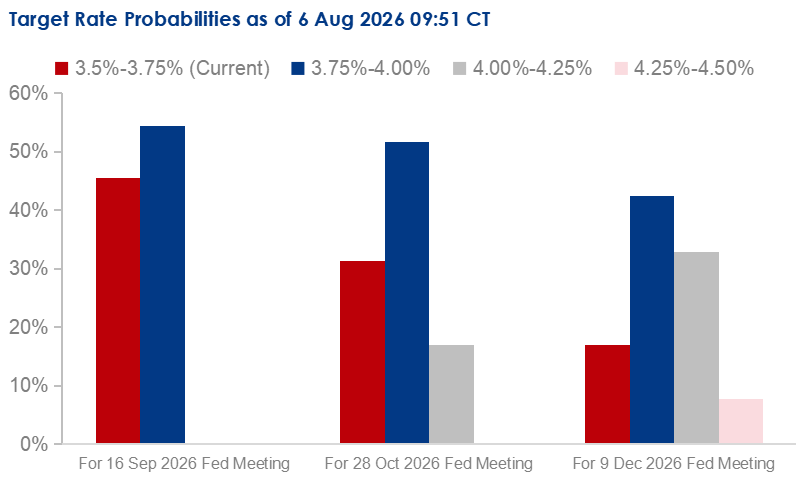
However, the policy outlook changed as inflation risks resurfaced. Rising energy prices amid Middle East tensions, combined with relatively resilient labor market conditions in the second quarter, shifted market expectations toward a more hawkish Fed stance. The appointment of Fed Chair Warsh further strengthened expectations of tighter monetary policy. His early policy signals prompted markets to reassess the possibility of rate hikes. Even after weaker GDP and PCE data released in late July, expectations for a September rate hike remained elevated, with markets pricing in a 54.5% probability as of August 6. Under the pressure of renewed rate-hike expectations, the U.S. dollar index repeatedly approached yearly highs in H1 2026, limiting copper's upside during much of the period.
Data source: CME, Mysteel
U.S. tariff expectations pull copper toward North America
Unlike previous cycles, uncertain U.S. tariff policy not only affected physical trade flows but also shifted global refined copper inventory structure.
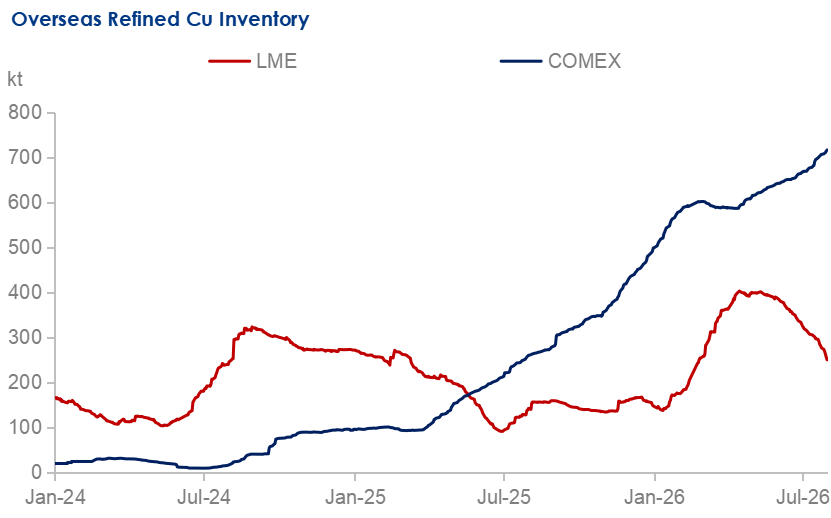
In February 2025, the U.S. launched a Section 232 investigation into copper imports. Tariffs were later imposed on semi-finished copper products and derivatives, while refined copper was temporarily excluded pending a report due by June 30, 2026 on whether additional duties would be applied. The uncertainty surrounding refined copper tariffs encouraged market participants to move copper into the U.S. ahead of potential measures. In July 2026 alone, roughly 200,000 tonnes of copper flowed into the U.S., the largest single-month inflow on record since 2014. Meanwhile, the COMEX premium was also sustained, opening arbitrage opportunities and accelerated inventory accumulation in the U.S. COMEX inventory increased by more than 43% from the beginning of the year.
Freely tradable copper globally has concentrated heavily toward the U.S., leaving non-U.S. spot supply constrained and inventories drawn down, which has in turn pushed copper prices into a higher trading range.
Data source: LME, COMEX, Mysteel
H2 2026 Outlook: Macro risks may drive frequent price volatility amid firm fundamental support
Looking ahead to the second half of 2026, persistently tight raw-material supply and structural demand growth from emerging sectors will continue to provide long-term support for copper prices. However, macro factors will remain the key source of short-term volatility.
On the downside, geopolitical risks remain unresolved. Any escalation in conflicts could trigger renewed energy price increases and risk-off sentiment, placing pressure on copper prices. Meanwhile, if inflation proves persistent and reinforces the Fed's hawkish stance, renewed expectations of higher rates could strengthen the U.S. dollar and weigh on copper. Tariff uncertainty also remains a major risk. If the U.S. delays refined copper tariffs or ultimately decides not to impose them, accumulated copper could flow back into non-U.S. markets, creating substantial selling pressure. Under such circumstances, the second-half copper price floor is projected near Yuan 95,000/tonne.
On the upside, a cooling of geopolitical tensions could reduce energy-driven inflation pressure and weaken expectations of further Fed tightening, providing support for copper. In addition, while the ultimate U.S. decision on refined-copper tariffs remains highly uncertain, the prevailing market view holds that if the U.S. begins phasing in refined-copper tariffs in 2027, the second half of 2026 remains a front-running window, and the tight non-U.S. supply should persist in supporting prices. Moreover, as critical minerals gain strategic prominence, growing resource protectionism could further constrain copper raw material supply and strengthen long-term price support. Under a favorable macro environment, copper prices could challenge the Yuan 110,000/tonne level again in the second half.
In summary, fundamentals in the second half 2026 should still provide fairly strong support for copper prices, but macro uncertainty will determine the scale of price fluctuations. Geopolitical conflicts, Fed policy expectations and U.S. tariff decisions are influencing copper through different channels, from inflation and liquidity conditions to global trade flows. If macro headwinds ease, prices could break above Yuan 110,000/tonne. However, should macro disruptions exert downward pressure, the floor is expected around Yuan 95,000/tonne.
Written by Zhaorui Cui, cuizhaorui@mysteel.com
Edited by Mingyuan Wang, wangmingyuan@mysteel.com