The Hormuz crisis has made resilience a permanent part of the energy market
Across two days of keynote speeches, CEO roundtables, geostrategic seminars and industry discussions, one question repeatedly surfaced: after the Hormuz crisis, can the energy market return to its previous operating model?
The emerging answer was clear. The market may recover some efficiency, but the underlying structure has changed. Energy security is increasingly being defined not simply by whether resources are available, but by whether they can be safely delivered, processed and distributed when normal routes are disrupted.
For China, the implications are significant. As the world's largest crude importer and a major participant in global refining, petrochemical and LPG markets, China is closely connected to the changes now unfolding across the Gulf.
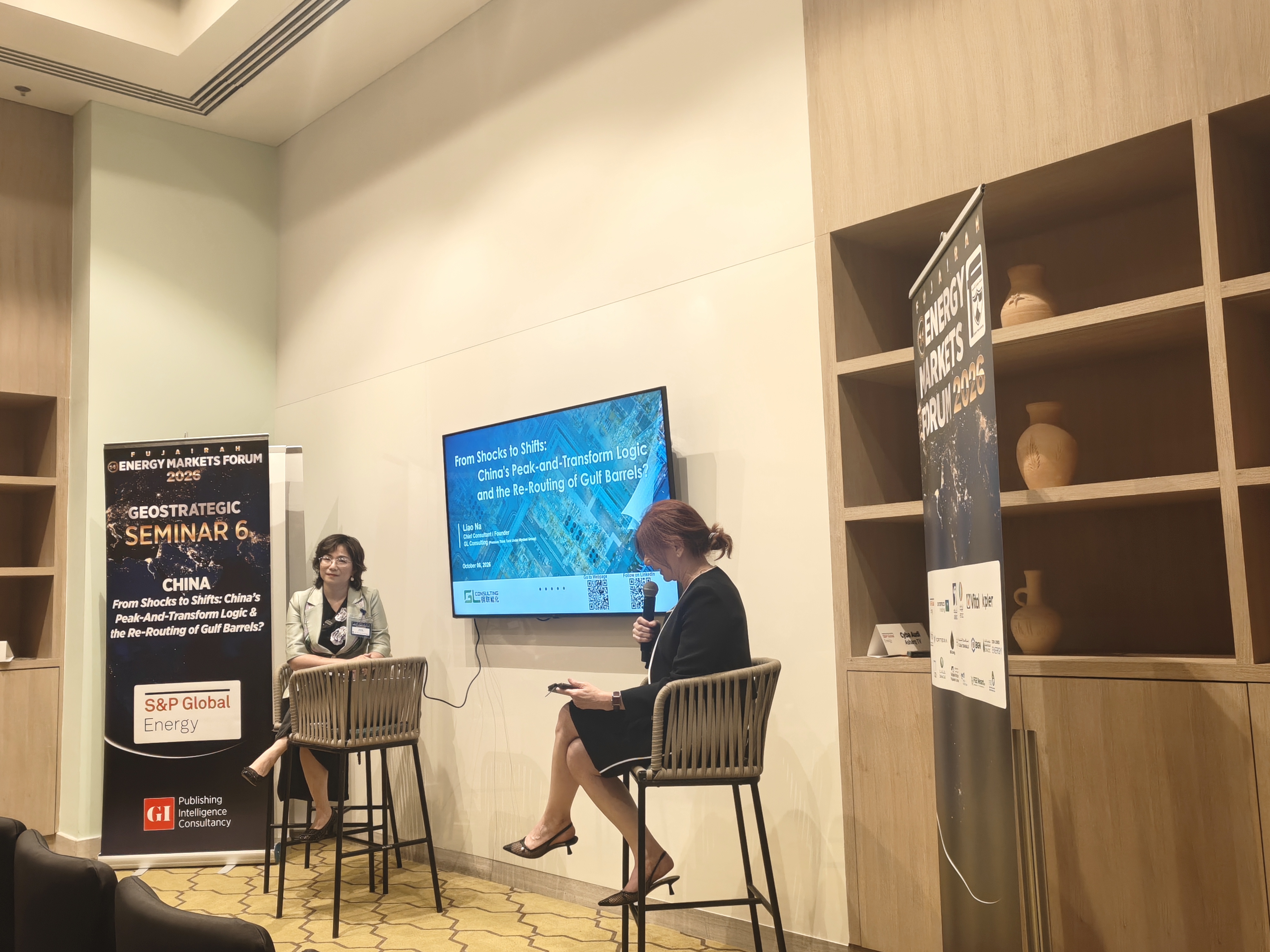
Liao Na, Chief Consultant & Founder of GL Consulting (Premium Think Tank Under Mysteel Group) and Vice President of Mysteel OilChem, joined the forum as a featured speaker, bringing a China-focused perspective into this broader discussion on the future of energy flows.
| From efficiency to resilience
For decades, the global energy system was built around efficiency: low inventories, high asset utilisation and optimised trade routes.
The Hormuz disruption has exposed the vulnerability of that model.
Insurance constraints, vessel diversions, congestion and infrastructure disruptions can quickly turn an efficient supply chain into a fragile one. The question facing the industry has therefore changed from how efficiently energy can move to how energy can keep moving when its normal route is no longer available.
This shift was reflected throughout the forum.
Participants increasingly described resilience not as an unnecessary cost, but as a form of strategic optionality. Additional storage, alternative suppliers, flexible refining capacity, shipping capability and redundant logistics routes may appear inefficient under normal conditions, but their value changes dramatically during a disruption.
The debate is therefore moving beyond whether resilience is necessary. The harder question is how much resilience is economically justified and who should pay for it.
This tension is already becoming visible in infrastructure investment. Strategic storage is expanding, governments are reassessing domestic inventories, and projects outside vulnerable chokepoints are attracting greater attention. At the same time, long-term leases and low utilisation rates mean the commercial model for redundancy remains far from straightforward.
| Hormuz has become a logistics problem as much as a supply problem
The crisis has also demonstrated that crude availability alone is no longer an adequate measure of energy security.
A country may have access to crude, but if vessels cannot sail, insurance is unavailable, refineries cannot operate or refined products cannot reach end-users, those barrels have limited economic value.
This distinction was repeatedly highlighted in Fujairah.
Gulf countries export around 5 million barrels per day of refined products and petrochemical products through Hormuz. While crude exports have recovered to some extent, constraints on refined products remain a major concern. The forum therefore drew a clear distinction between crude security and fuel security.
Shipping has become another major source of disruption.
Vessels are increasingly operating with AIS and other tracking systems switched off, reducing transparency across contested waters. Ship-to-ship transfers are also consuming significant tanker capacity. According to discussions at the forum, around 15% of the global VLCC fleet has been tied up in such operations, creating the equivalent of approximately 85 additional VLCCs of demand and pushing freight costs sharply higher.
This inefficient operating environment is not expected to disappear quickly. The discussions suggested that higher logistics costs and volatile shipping conditions could remain part of the market for the next two to three years.
| LPG has emerged as one of the most vulnerable links
One of the more important observations from the forum was that the most vulnerable energy product is not necessarily crude oil.
On October 7, Liao joined Industry Roundtable 6, "How Can Gas, LPG & Condensate Trading Strengthen Energy Security After Hormuz?", alongside senior representatives from IndianOil, Sharjah National Oil Corporation, Petrofac and other regional and international energy organisations.
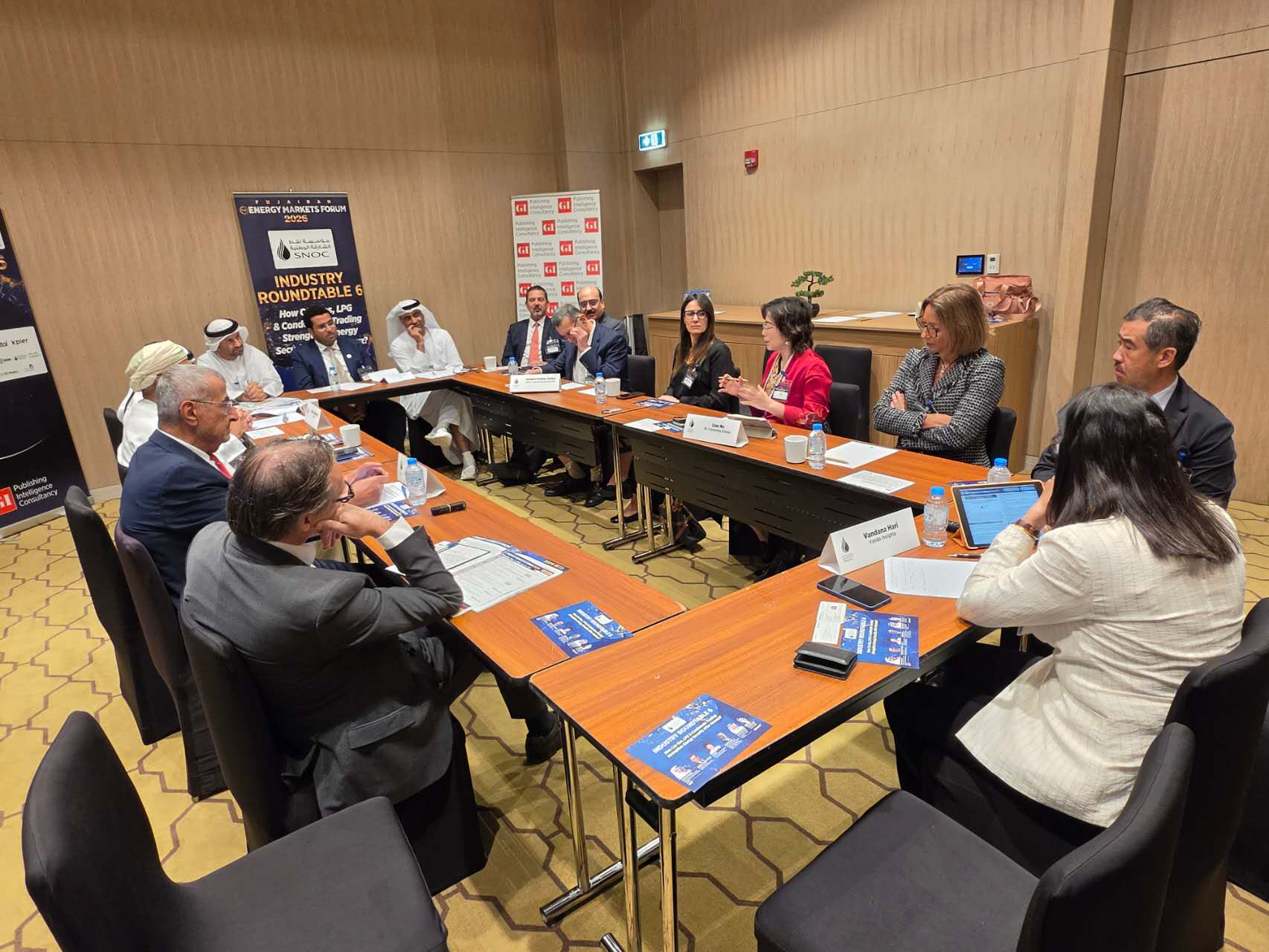
The discussion highlighted LPG as a particularly sensitive part of the supply chain.
India, for example, imports around 29 million tonnes of LPG annually, with approximately 85% used for household cooking. Despite its limited strategic crude inventories, India has been able to manage crude supply risks through diversified sourcing and substantial domestic refining capacity. LPG has proved more difficult to replace.
China faces a different structure.
The discussion noted that China has significantly more crude inventory coverage and has already adjusted its LPG sourcing mix, with the United States gaining a larger share while dependence on Middle Eastern supply has fallen. China also has an additional substitution option through its coal chemical industry when economics permit.
The comparison between China and India illustrates a broader point: energy security strategies cannot be reduced to a single inventory target. Vulnerability depends on the structure of demand, import dependence, refining capability, alternative feedstocks and the political sensitivity of individual products.
| Fujairah is moving from "Plan B" toward strategic infrastructure
Fujairah itself was a central part of the discussion.
Located outside the Strait of Hormuz, the emirate has long been positioned as a logistical alternative to the Gulf's most vulnerable chokepoint. The crisis has strengthened the strategic value of that position.
The forum highlighted infrastructure and corridor developments designed before the current disruption, including bonded logistics links and port expansion. AD Ports has also articulated a "zero Hormuz" strategy, indicating that investment in alternative routes is intended to continue regardless of short-term geopolitical negotiations.
This matters because one of the clearest conclusions from the forum was that infrastructure outside vulnerable chokepoints can transform apparent redundancy into a strategic asset.
In that sense, Fujairah is increasingly being viewed not simply as an emergency alternative, but as part of a longer-term redesign of regional energy logistics.
| China's changing oil market is reshaping its relationship with Gulf barrels
Liao Na also delivered the seminar lecture "From Shocks to Shifts: China's Peak-and-Transform Logic & the Re-Routing of Gulf Barrels."
Her session placed the immediate geopolitical disruption within a longer-term structural change taking place inside China's oil market.
China's demand structure, refinery economics and increasing orientation toward petrochemicals are changing the way the country interacts with global crude markets. As domestic fuel demand evolves, crude sourcing decisions are becoming increasingly connected with refinery configuration, petrochemical integration, product margins and energy security considerations.
The relevance extends beyond China itself.
Changes in Chinese crude demand and sourcing have direct implications for Gulf producers, while shifts in Middle Eastern infrastructure, trade routes and supply resilience feed back into China's refining and import strategies.
The broader forum discussions also pointed to growing links between China and Fujairah through logistics, equipment and regional cooperation. Chinese goods are increasingly moving through the port, while China's role in global inventory cycles and BRICS energy cooperation is becoming another variable in the emerging resilience framework.
| The new definition of energy security
Across the forum, several areas of consensus became increasingly clear.
The transition from "just-in-time" efficiency toward "just-in-case" resilience appears structural rather than temporary. Energy security now encompasses not only resource availability, but also delivery capability, refining, shipping, storage and business continuity. Optionality has therefore become part of the value of an energy system, rather than simply an additional cost.
But important questions remain unresolved.
Should countries prioritise crude inventories or refined products? How much redundancy is economically justified? Who pays for infrastructure that may remain underutilised until the next crisis? And which emergency routes will become permanent components of the regional energy system?
Different markets are already answering these questions differently. India is prioritising LPG vulnerability; Europe is placing greater emphasis on refined-product storage as refining capacity declines; China combines large crude inventories with diversified sourcing and domestic substitution options.
These differences mean the next phase of energy security will be shaped less by a single global model and more by how individual economies build optionality across their own supply chains.
| From market intelligence to strategic understanding
The Energy Markets Forum underscored how closely China's energy transition is now connected with developments across the Middle East.
Geopolitical disruption in the Gulf can alter freight economics, crude sourcing, LPG availability and refinery decisions in Asia. At the same time, structural changes in China's oil demand, refining system and petrochemical sector are increasingly influencing the direction of regional trade flows.
Ultra-high power graphite electrode prices: China (including origin)
Oct 09, 2026 11:52
Prebaked anode prices: Shandong
Oct 09, 2026 11:02
Ultra-high power graphite electrode prices: China (including origin)
Oct 08, 2026 11:13
Prebaked anode prices: Shandong
Oct 08, 2026 10:58
Ultra-high power graphite electrode prices: China (including origin)
Sep 30, 2026 11:30