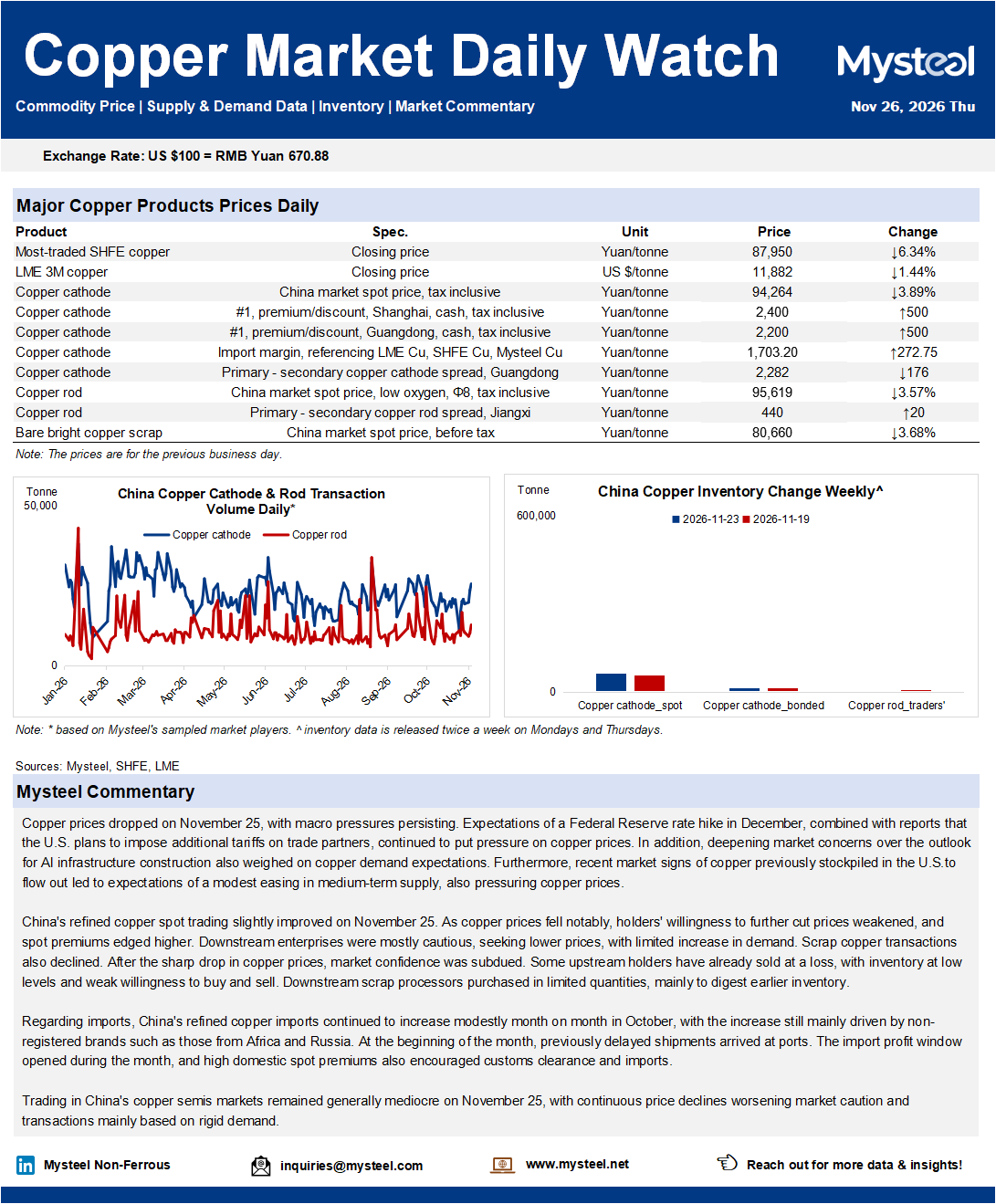
Copper prices dropped on November 25, with macro pressures persisting. Expectations of a Federal Reserve rate hike in December, combined with reports that the U.S. plans to impose additional tariffs on trade partners, continued to put pressure on copper prices. In addition, deepening market concerns over the outlook for AI infrastructure construction also weighed on copper demand expectations. Furthermore, recent market signs of copper previously stockpiled in the U.S.to flow out led to expectations of a modest easing in medium-term supply, also pressuring copper prices.
China's refined copper spot trading slightly improved on November 25. As copper prices fell notably, holders' willingness to further cut prices weakened, and spot premiums edged higher. Downstream enterprises were mostly cautious, seeking lower prices, with limited increase in demand. Scrap copper transactions also declined. After the sharp drop in copper prices, market confidence was subdued. Some upstream holders have already sold at a loss, with inventory at low levels and weak willingness to buy and sell. Downstream scrap processors purchased in limited quantities, mainly to digest earlier inventory.
Regarding imports, China's refined copper imports continued to increase modestly month on month in October, with the increase still mainly driven by non-registered brands such as those from Africa and Russia. At the beginning of the month, previously delayed shipments arrived at ports. The import profit window opened during the month, and high domestic spot premiums also encouraged customs clearance and imports.
Trading in China's copper semis markets remained generally mediocre on November 25, with continuous price declines worsening market caution and transactions mainly based on rigid demand.