At present, the aluminum market is viewed as a key driver of the global economy, supporting industries like construction, automotive, renewable energy, and packaging. The Aluminum Association reports a 3.4% year-over-year growth in North American aluminum demand in 2024. With rising demand across multiple sectors, businesses and investors are paying more attention than ever to aluminium market price trends and forecasts. In this article, we share Mysteel's insights on the aluminum market, exploring supply challenges, emerging opportunities, and price forecasts to help businesses navigate this evolving landscape.

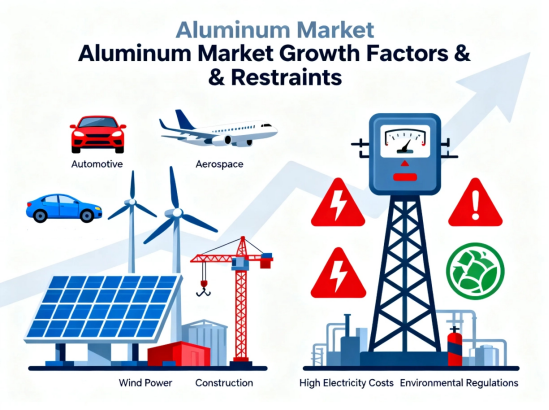
Aluminum Market Growth Factors and Restraints
The aluminum market continues to grow, supported by several long-term trends.
Growth Factor
First, the expanding use of lightweight materials in the automotive and aerospace industries is a major driver. Carmakers and aircraft manufacturers are under pressure to reduce emissions and improve fuel efficiency. Aluminum provides the perfect balance between strength and weight reduction.
Second, renewable energy projects are fueling additional demand. Solar panels, wind turbines, and grid infrastructure rely heavily on aluminum components for their durability and conductivity. As governments push for greener energy transitions, demand is set to rise further.
Third, infrastructure development in emerging economies contributes to strong consumption. Countries in Asia, Africa, and Latin America are investing in bridges, railways, and urban expansion, all of which require significant aluminum inputs.

Market Restraint
Despite this growth, there are also challenges. The production of aluminum is energy-intensive, making it highly sensitive to rising global energy costs. At the same time, stricter environmental regulations on carbon emissions are pressuring smelters to modernize operations. These factors raise costs and may slow production capacity expansions, limiting supply growth.
Emerging Market Opportunities
Amid challenges, opportunities are emerging in the aluminum industry. One of the most promising is the growing demand for recycled aluminum. Recycling requires just a fraction of the energy used in primary aluminum production, while helping reduce emissions. As sustainability becomes central to global business strategies, recycled aluminum is expected to gain more market share.
Another key opportunity lies in the green energy transition. Aluminum is essential in electric vehicle (EV) manufacturing, energy storage systems, and the expansion of grid infrastructure. Batteries and EV bodies require lightweight materials for efficiency, while transmission lines depend on aluminum's conductivity. This creates a robust growth avenue that will support long-term market expansion.

Aluminum Supply Challenges
While demand grows, aluminum supply faces serious challenges that could disrupt the balance between consumption and production.
First, geopolitical tensions have caused supply chain disruptions. Trade restrictions, sanctions, and shifting alliances impact the availability of raw materials and finished products. Such uncertainties often lead to regional shortages and pricing volatility.
Second, limited bauxite availability adds another layer of concern. Bauxite, the primary raw material for aluminum, is unevenly distributed globally. Countries with large reserves are imposing environmental restrictions and tighter mining regulations. This limits global access and complicates the supply chain.
Third, regional imbalances and export limitations continue to shape the market. Some producing regions prioritize domestic consumption over exports, while others face logistical bottlenecks. These imbalances create volatility and an uneven distribution of aluminum worldwide.
Aluminum Market Price Forecasts
Looking forward, the aluminum market forecast suggests both opportunities and uncertainties.
In the medium term, prices may experience fluctuations due to supply chain risks and energy market instability. Volatility could remain a recurring feature as producers adjust to new environmental policies and geopolitical changes.
In the longer term, however, stabilization may occur. Growing investment in recycling technologies, improved energy efficiency in smelters, and expanded green energy applications could balance supply and demand. Investors should be prepared for both short-term challenges and long-term growth potential.
Conclusion
At Mysteel, we believe that understanding the complexities of the aluminum market is essential for businesses and investors. From supply chain challenges to green energy opportunities, the landscape is evolving rapidly. Our website provides some research and insights to help clients anticipate aluminum supply and demand dynamics, evaluate risks, and identify profitable opportunities.
We encourage you to subscribe to Mysteel for deeper market insights, data-driven aluminum market forecasts, and professional guidance. With our expertise, you can make more informed investment and business decisions in an industry that is critical to the global economy.