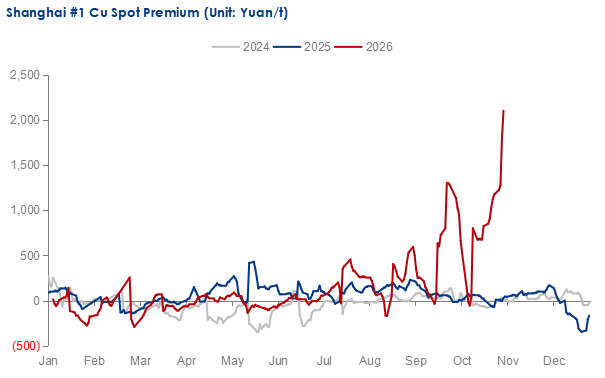
China's refined copper spot premiums have been surging recently, reaching a fresh high for 2026 on November 5. The average spot premium for #1 refined copper in Shanghai reached Yuan 2,100/tonne, rising by Yuan 300/tonne day on day. While seasonal smelter maintenance and persistent raw material shortages have constrained refined copper supply, the underlying demand recovery has been relatively modest. This suggests that the latest premium surge is primarily supply-driven, with future premiums expected to remain elevated.
Source: Mysteel
Structural supply constraints drive spot premiums higher
The fundamental driver behind the sharp increase in spot premiums is a contraction in refined copper supply, stemming from persistent shortages of both copper concentrate and copper scrap.
For one, tight concentrate availability has continued to weigh on Chinese smelters' raw material procurement. Copper concentrate treatment and refining charges (TC/RCs) have remained at extremely low levels, reflecting intense competition for limited feedstock and high costs for smelters. Meanwhile, sulfuric acid prices, which had provided an important source of by-product revenue for smelters, have declined since July, further eroding smelting margins. Under mounting cost pressures and limited raw material availability, some smelters have proactively reduced production. These constraints coincided with China's concentrated smelter maintenance schedule in October, resulting in a notable decline in domestic refined copper output recently.
The prospect of a meaningful supply recovery also remains limited. According to Mysteel's latest survey, domestic smelter production cuts are expected to average nearly 90,000 tonnes per month going forward. Furthermore, smelters are prioritizing deliveries under long-term contracts, leaving relatively limited volumes available for the spot market. Consequently, the recovery in domestically produced spot copper is unlikely to be substantial in the near term. Although refined copper imports may increase slightly, additional overseas copper is unlikely to fully offset the domestic supply shortfall.
For another, tightening regulations on China's copper scrap industry have created an additional source of pressure. The increasingly stringent implementation of the reverse invoicing policy has raised compliance costs and restricted the circulation of copper scrap. Some downstream processors that traditionally rely on copper scrap have therefore been forced to switch to refined copper as an alternative raw material. This substitution effect has added to refined copper procurement demand, further tightening spot availability.
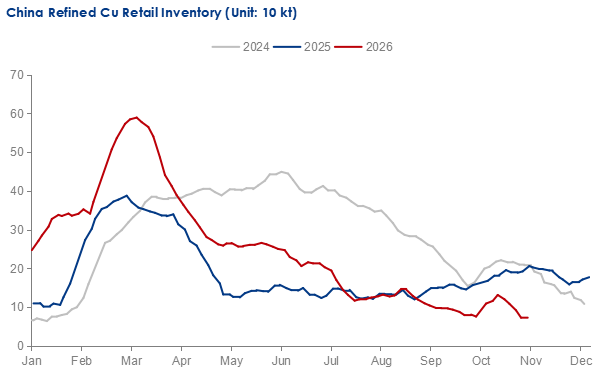
The supply constraints are increasingly evident in inventory movements. Since mid-October, China's refined copper spot inventory have declined rapidly, falling from 131,300 tonnes on October 15 to 73,100 tonnes on November 2, staying at a low level in 2026. With domestic production remaining constrained, spot supply limited by long-term contract commitments and import replenishment insufficient to bridge the gap, China's refined copper inventory is likely to remain limited in the near term, providing a solid fundamental basis for elevated spot premiums.
Source: Mysteel
Downstream demand offers limited upside
Since October, copper prices have retreated from a historical high, prompting some downstream enterprises to increase procurement during price corrections. However, this recovery remained largely driven by rigid consumption requirements and opportunistic restocking rather than a broad-based improvement in end-user demand.
Most downstream buyers remained cautious about increasing raw material inventory at current price levels. High absolute copper prices continued to weigh on purchasing sentiment, while sharply rising spot premiums further increased the actual procurement costs. As a result, many downstream processors are reluctant to accept the higher premiums, preferring to maintain only essential procurement volumes.
This created a divergence between the supply and demand sides of the spot market. On the one hand, limited spot availability and strong intention to support prices among holders pushed premiums higher. On the other, downstream purchasing capacity did not expanded proportionately, leaving transactions relatively subdued at elevated premium levels. Therefore, the current premium rally should be viewed primarily as a supply-driven repricing of scarce spot material, rather than evidence of a significant recovery in copper consumption.
Near-term premiums to remain elevated with limited upside
Looking ahead, China's refined copper spot premiums are expected to remain high in the near term, although the scope for another sharp increase may be limited. The approaching futures contract rollover is likely to reinforce tightness in the nearby market. With inventory already at low levels and deliverable material relatively scarce, short positions may face greater delivery pressure, providing additional support to nearby futures prices and the associated spot market. However, this support may ease after the delivery. Meanwhile, downstream resistance to high procurement costs is becoming increasingly apparent. Recent spot transactions have remained relatively weak, indicating that further premium increases may encounter stronger buying resistance. In addition, a gradual increase in refined copper imports, if realized, could provide some relief to domestic spot availability. Should import arrivals improve and supply-demand conditions become less strained, spot premiums may retreat from current highs, although a substantial correction appears unlikely given the persistently tight domestic supply outlook.
Written by Mingyuan Wang, wangmingyuan@mysteel.com