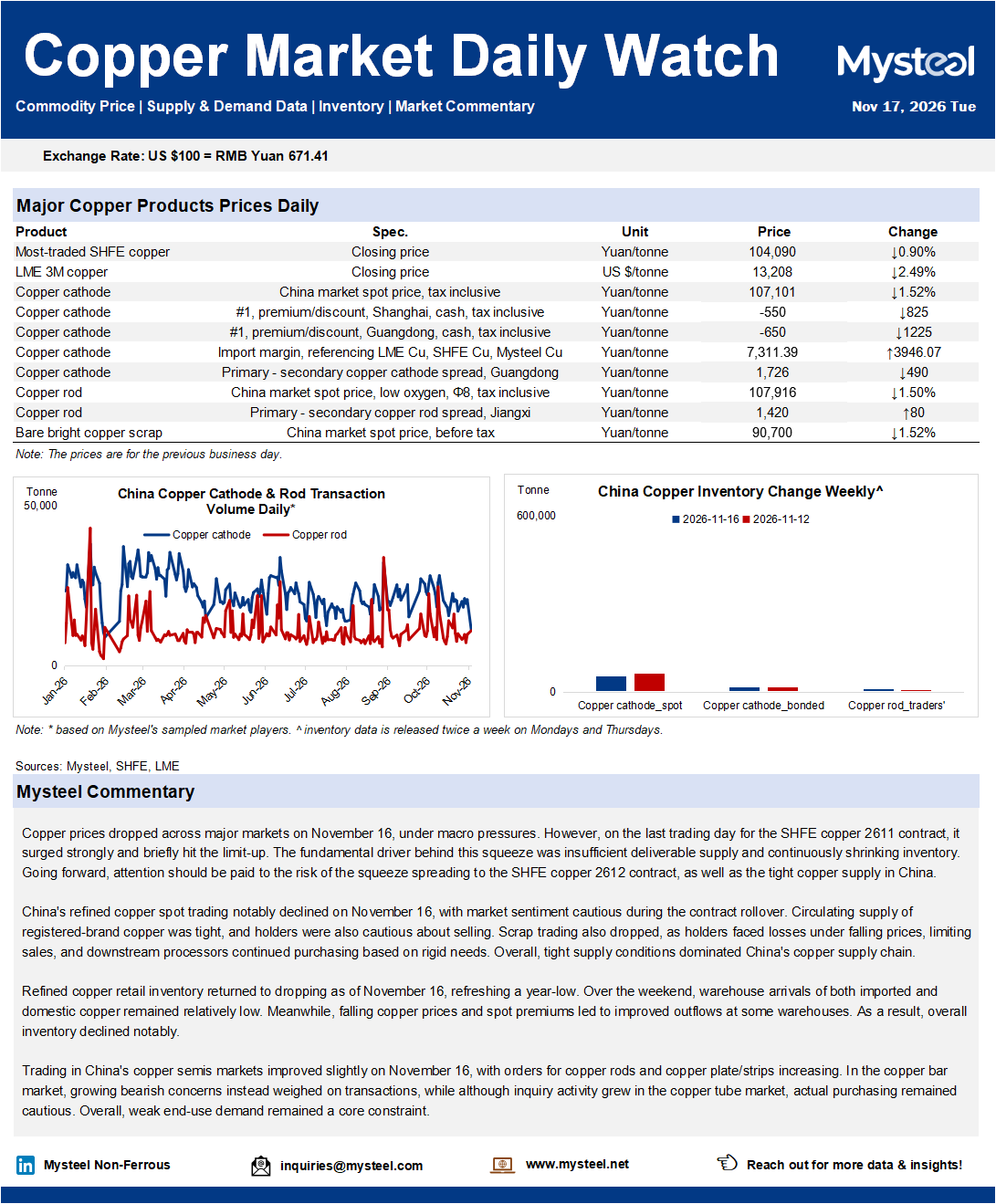
Copper prices dropped across major markets on November 16, under macro pressures. However, on the last trading day for the SHFE copper 2611 contract, it surged strongly and briefly hit the limit-up. The fundamental driver behind this squeeze was insufficient deliverable supply and continuously shrinking inventory. Going forward, attention should be paid to the risk of the squeeze spreading to the SHFE copper 2612 contract, as well as the tight copper supply in China.
China's refined copper spot trading notably declined on November 16, with market sentiment cautious during the contract rollover. Circulating supply of registered-brand copper was tight, and holders were also cautious about selling. Scrap trading also dropped, as holders faced losses under falling prices, limiting sales, and downstream processors continued purchasing based on rigid needs. Overall, tight supply conditions dominated China's copper supply chain.
Refined copper retail inventory returned to dropping as of November 16, refreshing a year-low. Over the weekend, warehouse arrivals of both imported and domestic copper remained relatively low. Meanwhile, falling copper prices and spot premiums led to improved outflows at some warehouses. As a result, overall inventory declined notably.
Trading in China's copper semis markets improved slightly on November 16, with orders for copper rods and copper plate/strips increasing. In the copper bar market, growing bearish concerns instead weighed on transactions, while although inquiry activity grew in the copper tube market, actual purchasing remained cautious. Overall, weak end-use demand remained a core constraint.