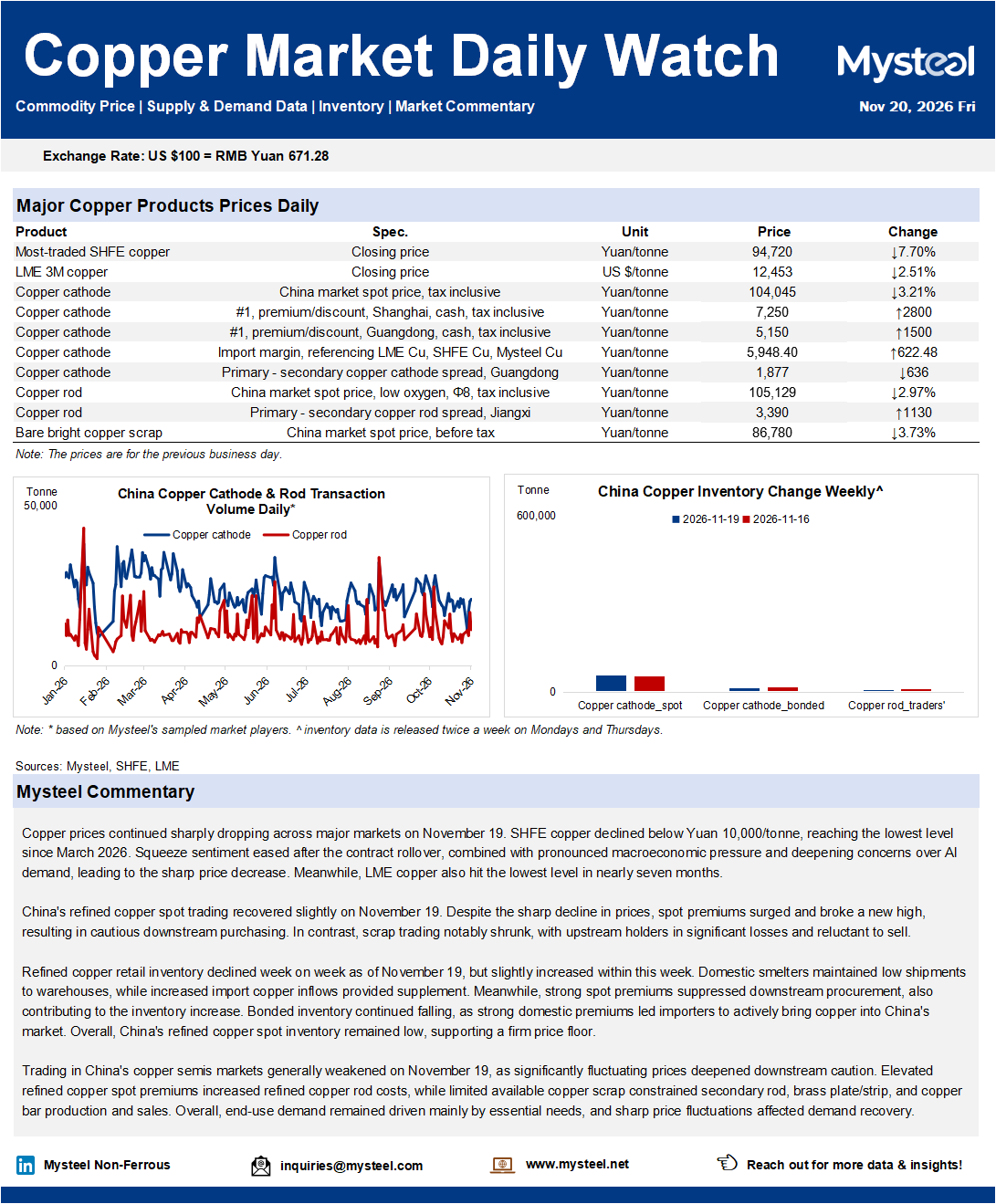
Copper prices continued sharply dropping across major markets on November 19. SHFE copper declined below Yuan 10,000/tonne, reaching the lowest level since March 2026. Squeeze sentiment eased after the contract rollover, combined with pronounced macroeconomic pressure and deepening concerns over AI demand, leading to the sharp price decrease. Meanwhile, LME copper also hit the lowest level in nearly seven months.
China's refined copper spot trading recovered slightly on November 19. Despite the sharp decline in prices, spot premiums surged and broke a new high, resulting in cautious downstream purchasing. In contrast, scrap trading notably shrunk, with upstream holders in significant losses and reluctant to sell.
Refined copper retail inventory declined week on week as of November 19, but slightly increased within this week. Domestic smelters maintained low shipments to warehouses, while increased import copper inflows provided supplement. Meanwhile, strong spot premiums suppressed downstream procurement, also contributing to the inventory increase. Bonded inventory continued falling, as strong domestic premiums led importers to actively bring copper into China's market. Overall, China's refined copper spot inventory remained low, supporting a firm price floor.
Trading in China's copper semis markets generally weakened on November 19, as significantly fluctuating prices deepened downstream caution. Elevated refined copper spot premiums increased refined copper rod costs, while limited available copper scrap constrained secondary rod, brass plate/strip, and copper bar production and sales. Overall, end-use demand remained driven mainly by essential needs, and sharp price fluctuations affected demand recovery.