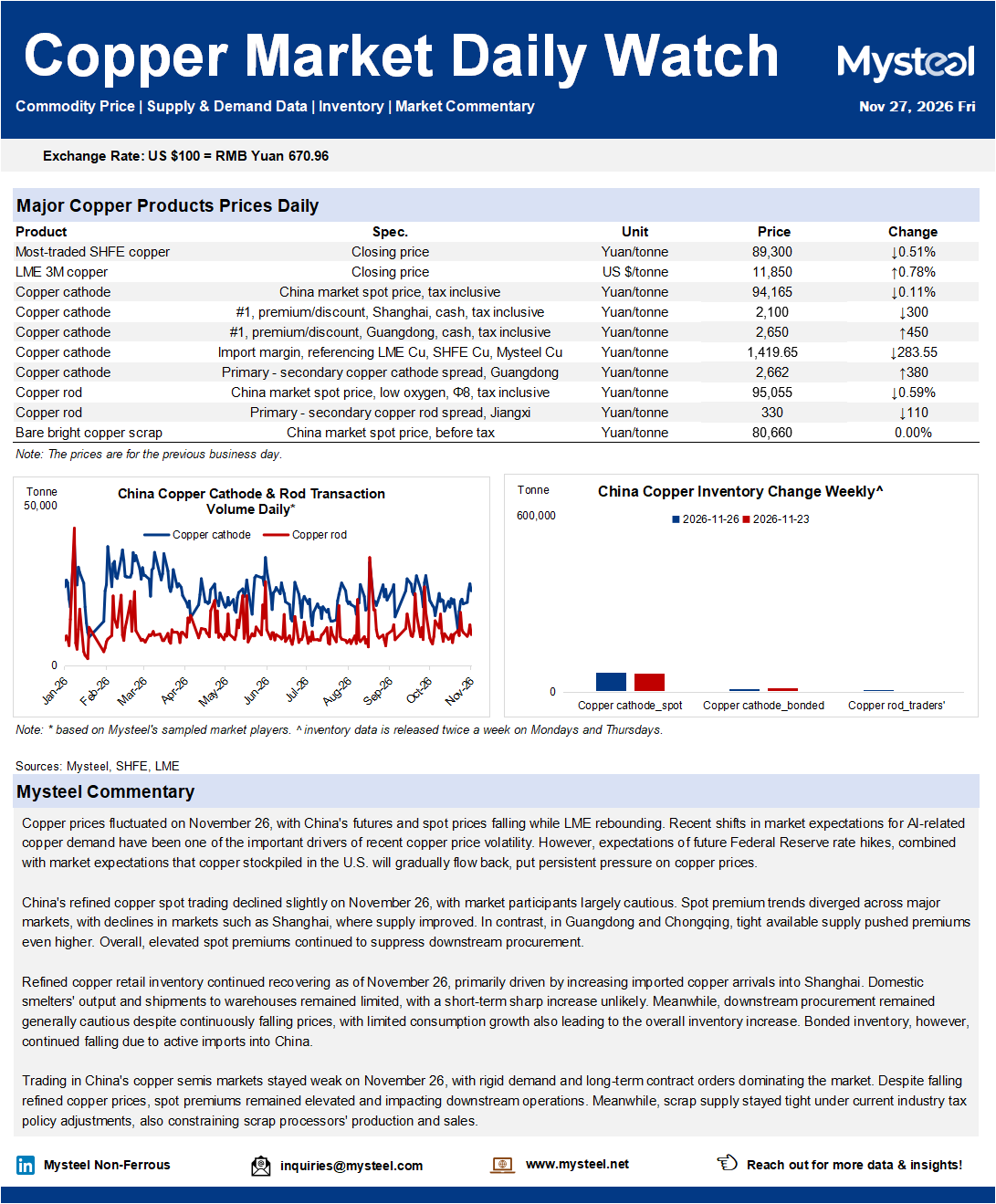
Copper prices fluctuated on November 26, with China's futures and spot prices falling while LME rebounding. Recent shifts in market expectations for AI-related copper demand have been one of the important drivers of recent copper price volatility. However, expectations of future Federal Reserve rate hikes, combined with market expectations that copper stockpiled in the U.S. will gradually flow back, put persistent pressure on copper prices.
China's refined copper spot trading declined slightly on November 26, with market participants largely cautious. Spot premium trends diverged across major markets, with declines in markets such as Shanghai, where supply improved. In contrast, in Guangdong and Chongqing, tight available supply pushed premiums even higher. Overall, elevated spot premiums continued to suppress downstream procurement.
Refined copper retail inventory continued recovering as of November 26, primarily driven by increasing imported copper arrivals into Shanghai. Domestic smelters' output and shipments to warehouses remained limited, with a short-term sharp increase unlikely. Meanwhile, downstream procurement remained generally cautious despite continuously falling prices, with limited consumption growth also leading to the overall inventory increase. Bonded inventory, however, continued falling due to active imports into China.
Trading in China's copper semis markets stayed weak on November 26, with rigid demand and long-term contract orders dominating the market. Despite falling refined copper prices, spot premiums remained elevated and impacting downstream operations. Meanwhile, scrap supply stayed tight under current industry tax policy adjustments, also constraining scrap processors' production and sales.