WRAP-UP: Ten major news in China 2019 iron ore market - 3
Source: Mysteel
Dec 27, 2019 15:00
8. China’s steelworks loaded light of iron ore on high prices and frequent curbs
Moreover, frequent curbing from local authorities in various names on steel mills’ sintering and blast furnaces throughout the year especially in the key steelmaking provinces such as Tangshan, North China’s Hebei province, has made more sense for the local steel mills to be light loaded with steelmaking raw materials especially the rather expensive iron ore to have more flexibility in iron ore feeds into blast furnaces.
In 2019, for example, Mysteel’s survey on 64 steel mills showed that their imported iron ore sintering fines stocks ranged between 14.51-19.95 million tonnes compared with the range between 15-22.1 million tonnes in 2018.
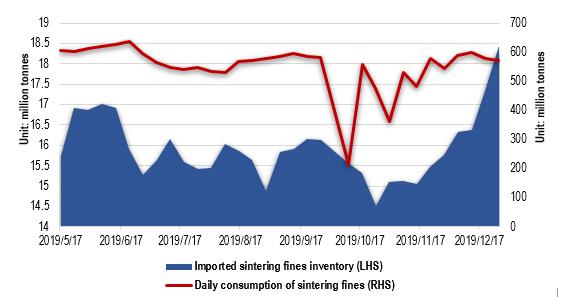 Figure 3: Mysteel’s survey among 64 steelmakers across China, Source: Mysteel’s bi-weekly survey
9. Cost-consciousness promoted lower-grade iron ore among Chinese steel mills
Lower-grade iron ore has been with growing popularity among Chinese steel mills since around February-March when the seaborne iron ore price and then the Yuan-price iron ore soared, as the steel producers, squeezed by the rising iron ore price and decreasing steel margins have resorted to the best combination of iron ore by mixing lower-grade imported iron ore with domestically-produced concentrates for the cost effectiveness and efficiency.
The peak of lower-grade iron ore popularity was reached in July and FMG, a core lower-grade iron ore supplier to China with the ferrous content ranging 56-61%, has benefited greatly from the change of procurement strategy among the Chinese steel mills, and it has been able to gradually reduced its discounts on its products month by month.
FMG’s discount for its 56.5% Super Special Fines (SSF) was only about 6% against the 62% Australian fines pricing index for August sales from the 37% discount in January and the discount for its 58.2% FMG Blend Fines was as low as 4% against the 28% discount in January.
FMG, however, has enlarged its discounts again since September with the growing supplies of higher-grade iron ore and lower iron ore prices, though the discounts were still not as deep as a year ago, and SSF, for example, the discount for December sales is at 15% against the 40% discount for December 2018 sales.
10. China’s domestic iron ore output grew 7%
Amid the price surges in both seaborne and the domestic iron ore prices most of the time for 2019 and higher margins, China’s domestic iron ore output both in raw ore and concentrates, and over January-November, China’s domestic iron ore concentrates output among the 332 mining companies grew 7% or about 16 million tonnes on year to about 224 million tonnes, according to Mysteel’s own survey.
The country’s run-of-mine iron ore output grew at a similar pace of 6.3% on year to about 786 million tonnes over January-November, and the large- and medium-sized miners posted an eye-widening 365% year-on-year growth to Yuan 12.8 billion over the first ten months, according to the statistics from the Metallurgical Mines’ Association of China.
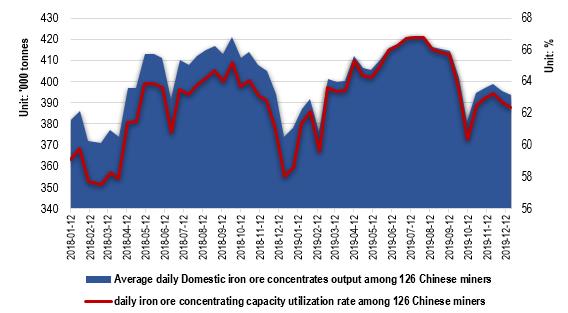 Figure 4: Mysteel’s survey on 126 Chinese iron ore miners’ operation, Source: Mysteel’s bi-weekly survey
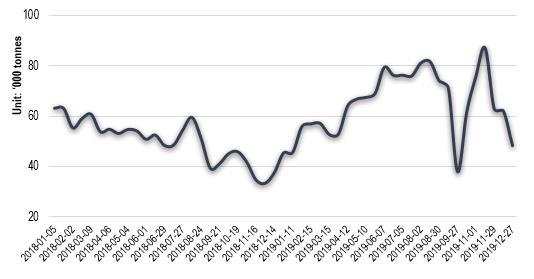 Figure 5: Daily domestic sintering concentrates use among 64 Chinese steel mills, Source: Mysteel’s bi-weekly survey
Edited by Hongmei Li, li.hongmei@mysteel.com
You May Also Like
Price Curve
Daily Prices
Mysteel Iron Ore Index
Oct 23, 2026 19:22
Mysteel portside iron ore spot basis
Oct 23, 2026 18:25
Mysteel Portside Iron Ore Indices (PORTDEX)
Oct 23, 2026 18:25
Imported iron ore prices: China's major cities
Oct 23, 2026 18:12
Iron ore portside prices: Dalian port
Oct 23, 2026 18:06