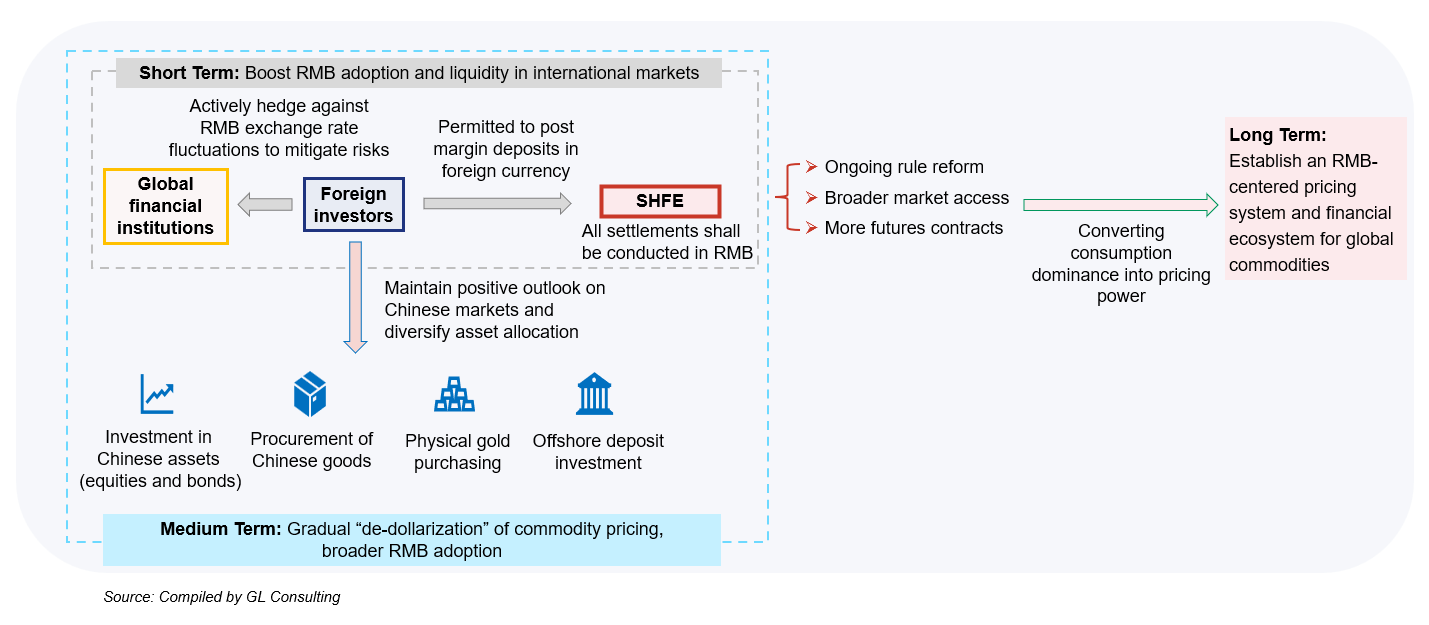
In 2025, China's push to internationalize the RMB is set to gain significant momentum, underpinned by upgrades to cross-border payment infrastructure and active exploration of RMB-denominated stablecoins. The Shanghai Futures Exchange (SHFE)'s draft reform proposal released in May 2025 marks more than just a widening of market access - it reflects a structural shift aimed at reshaping the foundations of cross-border commodity trading under "Chinese rules." This signals a transition from building transaction channels to establishing a comprehensive RMB-based trading ecosystem.
A key focus of the reform is "rule-based opening," in line with China's broader agenda of institutional opening-up outlined at the Third Plenary Session of the 20th CPC Central Committee. The proposed mechanism - combining foreign currency margin with centralized RMB settlement - is designed to lower cross-border capital barriers, enhance transaction efficiency, and strengthen China's pricing influence in global commodity markets.
Breakthrough in Cross-Border Efficiency
- Zero FX Conversion Costs: Foreign investors can pledge margin deposits in foreign currency directly, eliminating approximately 0.15% in foreign exchange (FX) conversion costs per transaction. Based on an estimated annual trading volume of USD 10 trillion, this equates to potential savings of around USD 1.5 billion per year.
- RMB Settlement: Mandatory profit and loss settlements in RMB encourage foreign investors to reinvest onshore. Since 2024, policymakers have stepped up efforts to support Hong Kong listings by companies in mainland China and dual listings within the Greater Bay Area, enhancing the appeal of RMB assets and supporting a sustainable closed-loop capital system.
Enhancement in China's Pricing Power
- Futures Contracts Involving Energy and Petrochemicals: Covering crude oil, low-sulfur fuel oil (LSFO), fuel oil, and bitumen, etc.
- Linkage with Middle Eastern Markets: Over one-third of China's crude oil imports come from the Middle East, and SHFE's SC crude futures are aligned with regional crude specifications. Greater foreign participation is expected to enhance SC's influence as a pricing benchmark for Middle Eastern oil trading.
- Exchange Rate Risk Mitigation: Broader international recognition of SC pricing could encourage Middle Eastern suppliers to adopt "SC price plus RMB" settlement. This would reduce FX exposure for Chinese refiners. For example, based on USD 10 billion in annual crude oil imports, a 3% exchange rate fluctuation implies potential savings of around USD 300 million.
A New Pathway Amid Dollar Volatility
Against the backdrop of rising U.S. Treasury risks and the increasing use of financial sanctions by the U.S., global investors are actively seeking non-dollar assets. The SHFE's reform will:
- Reduce reliance on USD settlement and mitigate FX volatility.
- Provide a new channel for RMB-denominated commodity allocation, helping companies manage geopolitical risks.
Key Challenges:
- Crude Import Quota Restrictions: Existing quota controls constrain market-based pricing, requiring supporting policy reforms.
- Alignment with Global Standards: Cross-border regulatory coordination and tiered settlement design must meet international benchmarks such as IOSCO standards.
- Progress: Public commentary on the draft was open until June 4, 2025. The final version is under revision, with an implementation timeline yet to be announced.
The full report provides an in-depth analysis of SHFE's internationalization reforms. Subscribe to access:
- Core reform highlights: Expanding foreign participation and aligning with international regulatory standards
- Reform background and objectives: Building an RMB-based commodity trading ecosystem to support RMB internationalization
- Short-, medium-, and long-term implications of SHFE's internationalization agenda
- Sector-specific impact assessment for the energy and petrochemical industries
The above content is the major conclusions and highlights extracted from China (Energy Transition) Policy Perspective. To get detailed full text, send an email to glconsulting@mysteel.com.
