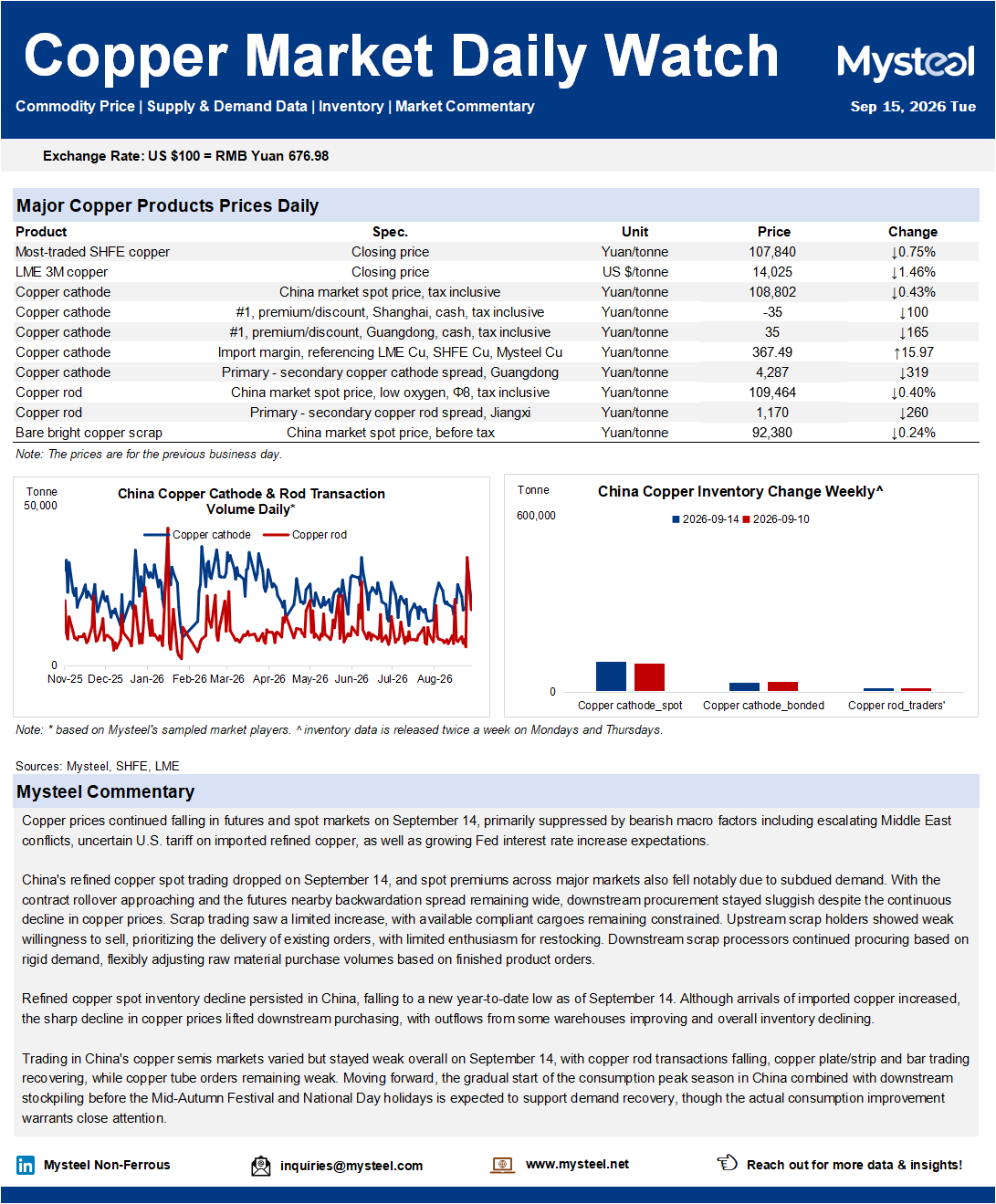
Copper prices continued falling in futures and spot markets on September 14, primarily suppressed by bearish macro factors including escalating Middle East conflicts, uncertain U.S. tariff on imported refined copper, as well as growing Fed interest rate increase expectations.
China's refined copper spot trading dropped on September 14, and spot premiums across major markets also fell notably due to subdued demand. With the contract rollover approaching and the futures nearby backwardation spread remaining wide, downstream procurement stayed sluggish despite the continuous decline in copper prices. Scrap trading saw a limited increase, with available compliant cargoes remaining constrained. Upstream scrap holders showed weak willingness to sell, prioritizing the delivery of existing orders, with limited enthusiasm for restocking. Downstream scrap processors continued procuring based on rigid demand, flexibly adjusting raw material purchase volumes based on finished product orders.
Refined copper spot inventory decline persisted in China, falling to a new year-to-date low as of September 14. Although arrivals of imported copper increased, the sharp decline in copper prices lifted downstream purchasing, with outflows from some warehouses improving and overall inventory declining.
Trading in China's copper semis markets varied but stayed weak overall on September 14, with copper rod transactions falling, copper plate/strip and bar trading recovering, while copper tube orders remaining weak. Moving forward, the gradual start of the consumption peak season in China combined with downstream stockpiling before the Mid-Autumn Festival and National Day holidays is expected to support demand recovery, though the actual consumption improvement warrants close attention.