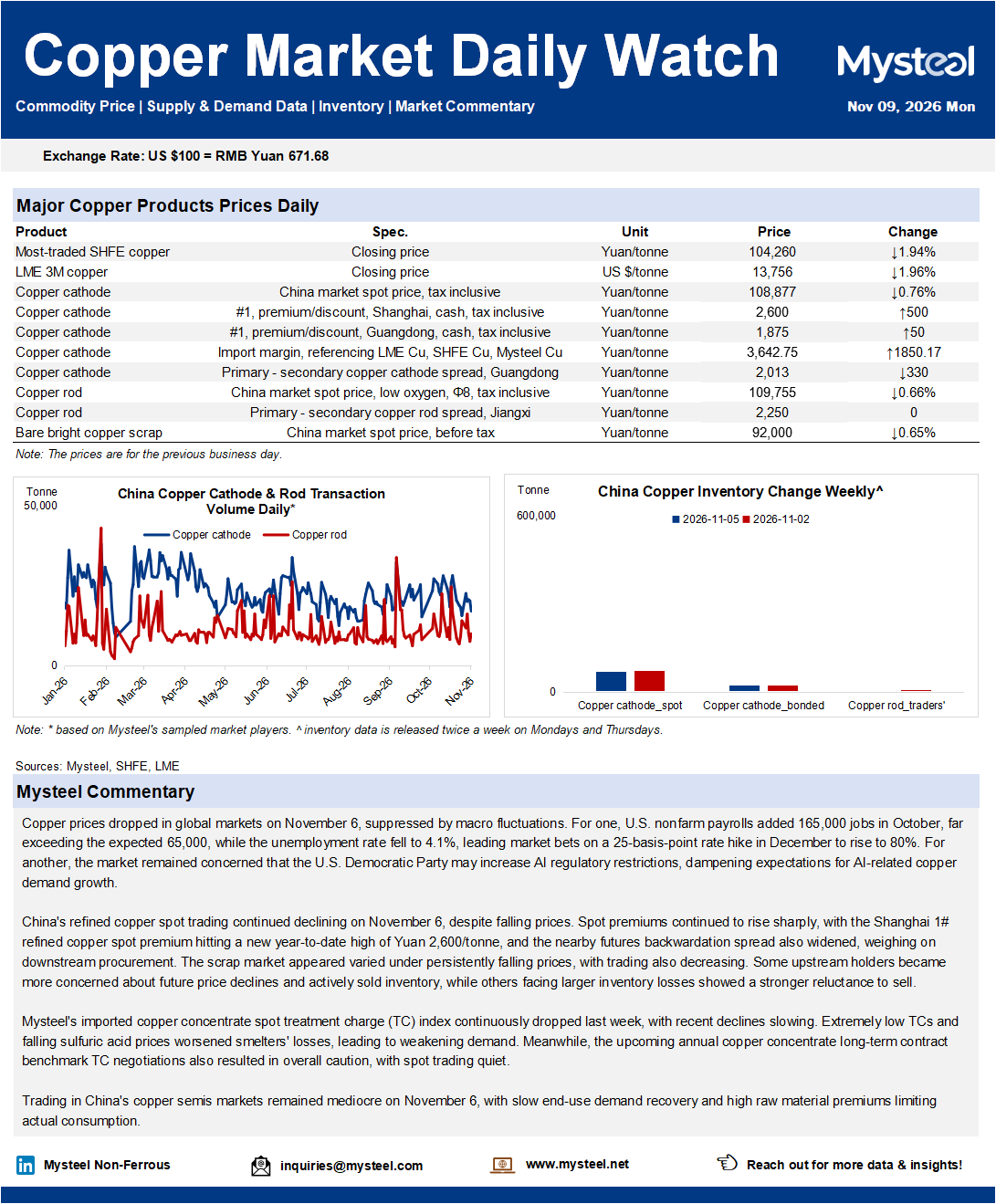
Copper prices dropped in global markets on November 6, suppressed by macro fluctuations. For one, U.S. nonfarm payrolls added 165,000 jobs in October, far exceeding the expected 65,000, while the unemployment rate fell to 4.1%, leading market bets on a 25-basis-point rate hike in December to rise to 80%. For another, the market remained concerned that the U.S. Democratic Party may increase AI regulatory restrictions, dampening expectations for AI-related copper demand growth.
China's refined copper spot trading continued declining on November 6, despite falling prices. Spot premiums continued to rise sharply, with the Shanghai 1# refined copper spot premium hitting a new year-to-date high of Yuan 2,600/tonne, and the nearby futures backwardation spread also widened, weighing on downstream procurement. The scrap market appeared varied under persistently falling prices, with trading also decreasing. Some upstream holders became more concerned about future price declines and actively sold inventory, while others facing larger inventory losses showed a stronger reluctance to sell.
Mysteel's imported copper concentrate spot treatment charge (TC) index continuously dropped last week, with recent declines slowing. Extremely low TCs and falling sulfuric acid prices worsened smelters' losses, leading to weakening demand. Meanwhile, the upcoming annual copper concentrate long-term contract benchmark TC negotiations also resulted in overall caution, with spot trading quiet.
Trading in China's copper semis markets remained mediocre on November 6, with slow end-use demand recovery and high raw material premiums limiting actual consumption.