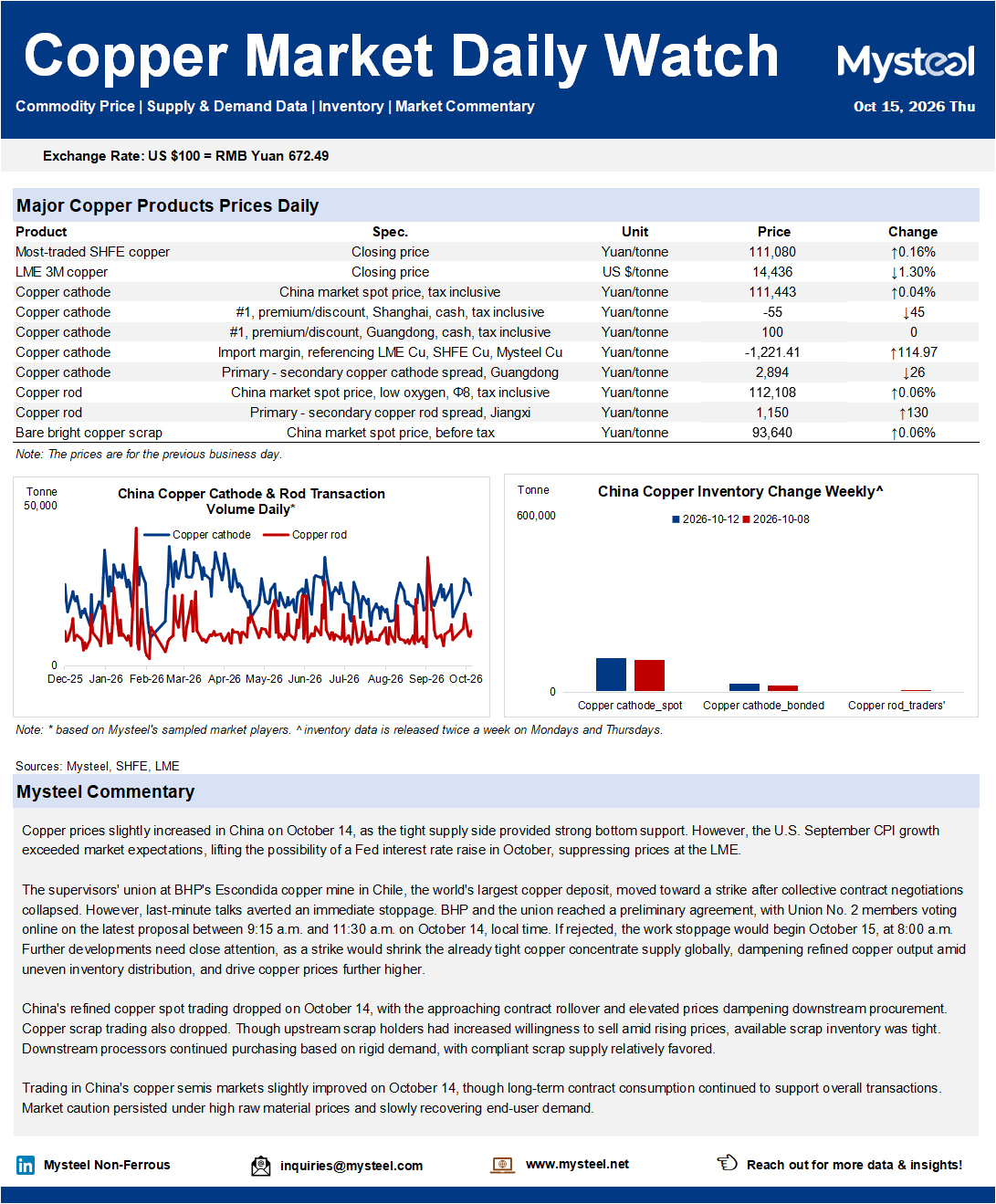
Copper prices slightly increased in China on October 14, as the tight supply side provided strong bottom support. However, the U.S. September CPI growth exceeded market expectations, lifting the possibility of a Fed interest rate raise in October, suppressing prices at the LME.
The supervisors' union at BHP's Escondida copper mine in Chile, the world's largest copper deposit, moved toward a strike after collective contract negotiations collapsed. However, last-minute talks averted an immediate stoppage. BHP and the union reached a preliminary agreement, with Union No. 2 members voting online on the latest proposal between 9:15 a.m. and 11:30 a.m. on October 14, local time. If rejected, the work stoppage would begin October 15, at 8:00 a.m. Further developments need close attention, as a strike would shrink the already tight copper concentrate supply globally, dampening refined copper output amid uneven inventory distribution, and drive copper prices further higher.
China's refined copper spot trading dropped on October 14, with the approaching contract rollover and elevated prices dampening downstream procurement. Copper scrap trading also dropped. Though upstream scrap holders had increased willingness to sell amid rising prices, available scrap inventory was tight. Downstream processors continued purchasing based on rigid demand, with compliant scrap supply relatively favored.
Trading in China's copper semis markets slightly improved on October 14, though long-term contract consumption continued to support overall transactions. Market caution persisted under high raw material prices and slowly recovering end-user demand.