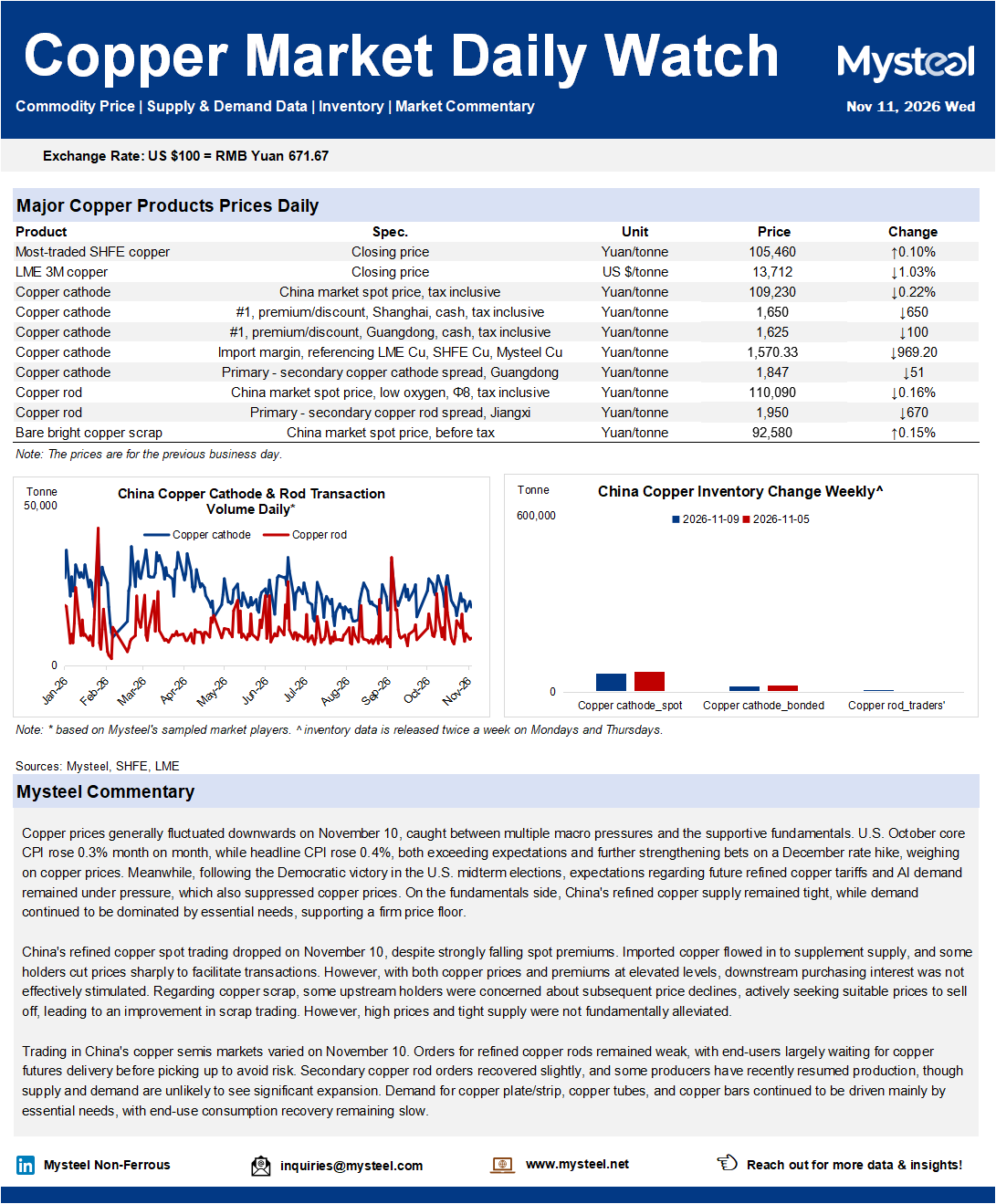
Copper prices generally fluctuated downwards on November 10, caught between multiple macro pressures and the supportive fundamentals. U.S. October core CPI rose 0.3% month on month, while headline CPI rose 0.4%, both exceeding expectations and further strengthening bets on a December rate hike, weighing on copper prices. Meanwhile, following the Democratic victory in the U.S. midterm elections, expectations regarding future refined copper tariffs and AI demand remained under pressure, which also suppressed copper prices. On the fundamentals side, China's refined copper supply remained tight, while demand continued to be dominated by essential needs, supporting a firm price floor.
China's refined copper spot trading dropped on November 10, despite strongly falling spot premiums. Imported copper flowed in to supplement supply, and some holders cut prices sharply to facilitate transactions. However, with both copper prices and premiums at elevated levels, downstream purchasing interest was not effectively stimulated. Regarding copper scrap, some upstream holders were concerned about subsequent price declines, actively seeking suitable prices to sell off, leading to an improvement in scrap trading. However, high prices and tight supply were not fundamentally alleviated.
Trading in China's copper semis markets varied on November 10. Orders for refined copper rods remained weak, with end-users largely waiting for copper futures delivery before picking up to avoid risk. Secondary copper rod orders recovered slightly, and some producers have recently resumed production, though supply and demand are unlikely to see significant expansion. Demand for copper plate/strip, copper tubes, and copper bars continued to be driven mainly by essential needs, with end-use consumption recovery remaining slow.